
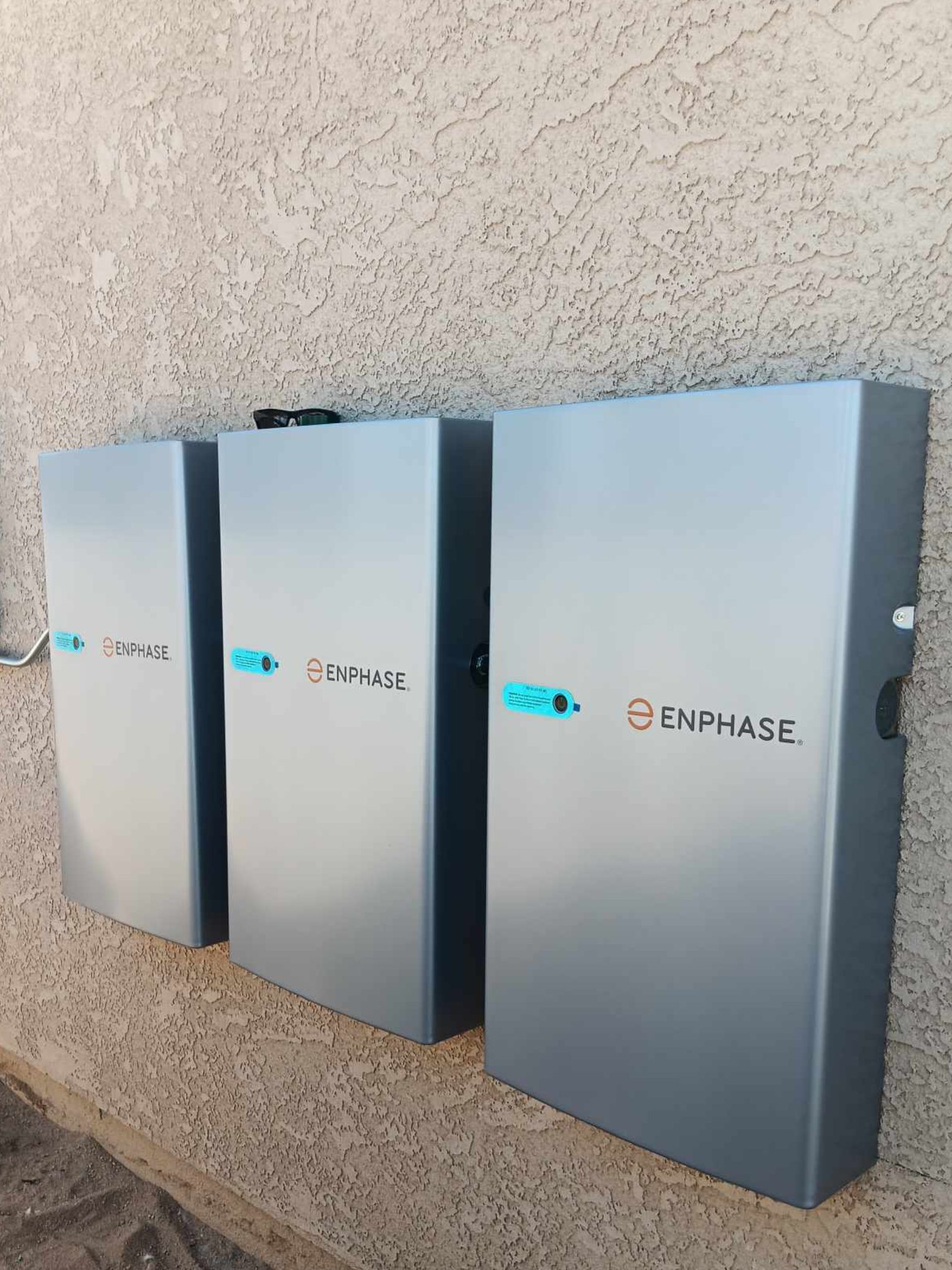
Understanding the Difference: Grid-Tied Batteries vs. Battery Backup Systems
Not all battery systems work the same way. While both store energy, grid-tied batteries and battery backup systems serve different purposes. Choosing the right option depends on your goals—whether that’s lowering your utility bill or maintaining power during outages.
Grid-Tied Battery Systems (No Backup Power)
Grid-tied batteries are designed to help reduce your electric bill, not to provide power during outages.
These systems store energy—typically from solar or the grid—and discharge it during high time-of-use (TOU) or peak rate periods, as well as during nighttime consumption. By using stored energy when utility rates are highest, homeowners can significantly reduce their monthly electric costs.
Important to know:
When the utility grid goes down, a grid-tied battery system does not provide backup power. For safety reasons, the system shuts down during outages to prevent energy from feeding back into the grid.
Best for homeowners who want to:
Battery Backup Systems (Power During Outages)
Battery backup systems are designed to provide power when the grid goes down, in addition to offering time-of-use and peak rate savings.
When a power outage occurs, the system automatically disconnects from the utility grid and supplies power to your home using stored energy—and solar power if available. Depending on system size and design, this can support critical loads, partial home backup, or whole-home backup.
Battery backup systems also allow homeowners to:
Best for homeowners who want to:
Choosing the Right System for Your Home
Every home and energy goal is different. Our team works with you to determine whether a grid-tied battery system or a battery backup system makes the most sense based on your usage, budget, and long-term goals.